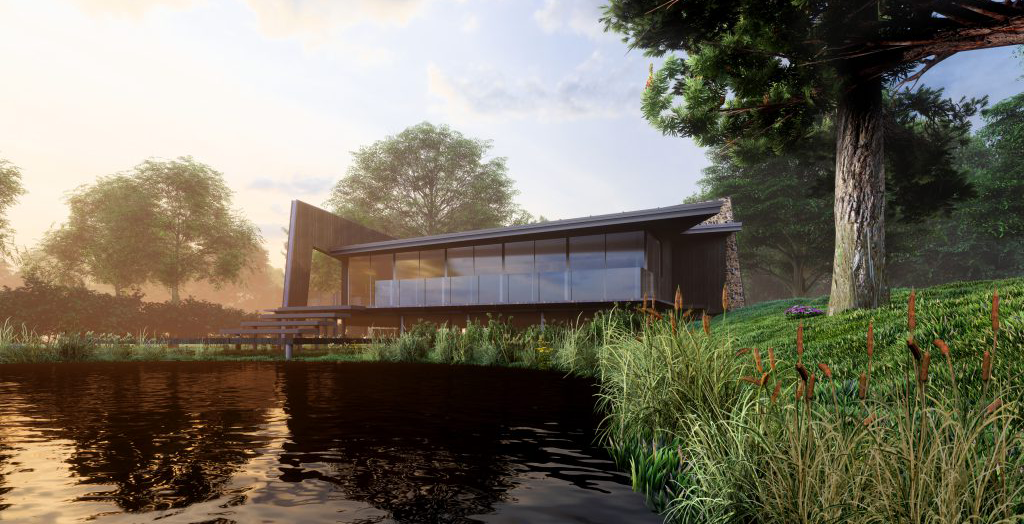
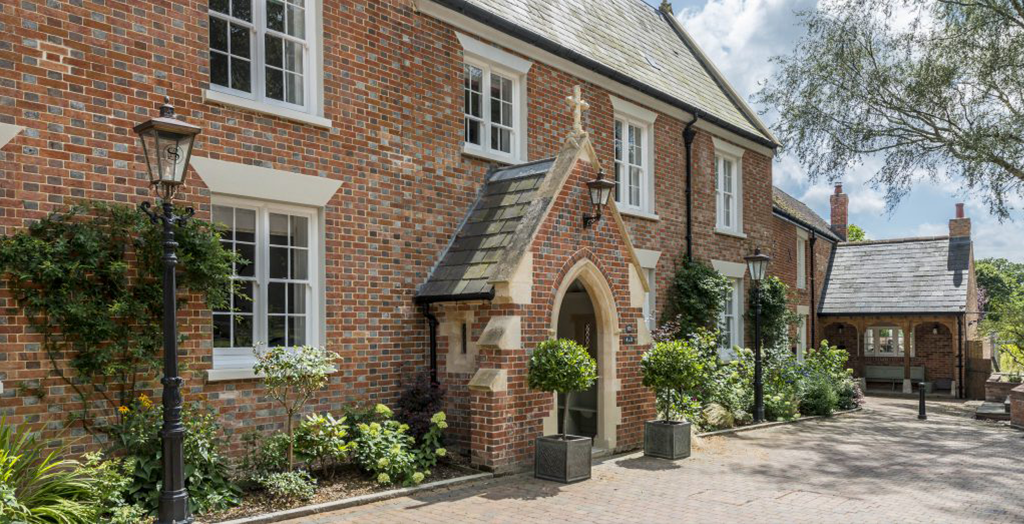
Our client had acquired the site and appointed Scott Worsfold Associates as lead architects and urban designers for this special site, near Oxford. The local area presented a rich tapestry of architecture and materials from which to draw influence.
Design concepts evolved and presentations to the Local Planning Authority Planning and Urban Design officers, as well as key stakeholders.
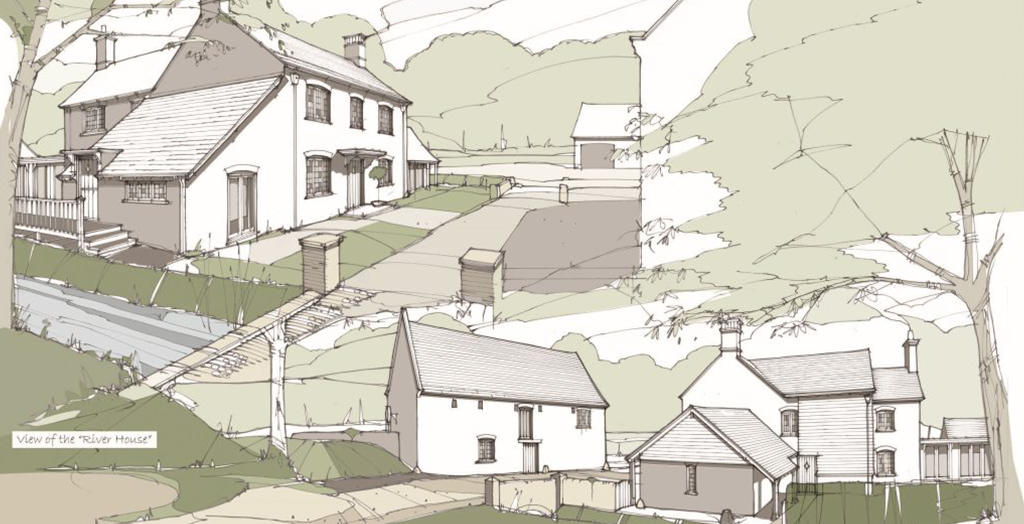
Again, our fine art watercolours convinced and won support for a small community set around a sequence of shared surface courtyards. Now built, these photographs are from its first release. We look forward to returning, to see how well it has matured and settled into its place.
This design proposal created a planned new arrangement of more humble domestic forms, arranged into three courtyards to convey the sensation of a rural estate.
The proposal consists of 15 dwellings with a mixture of 2, 3, and 4 bedroom homes.
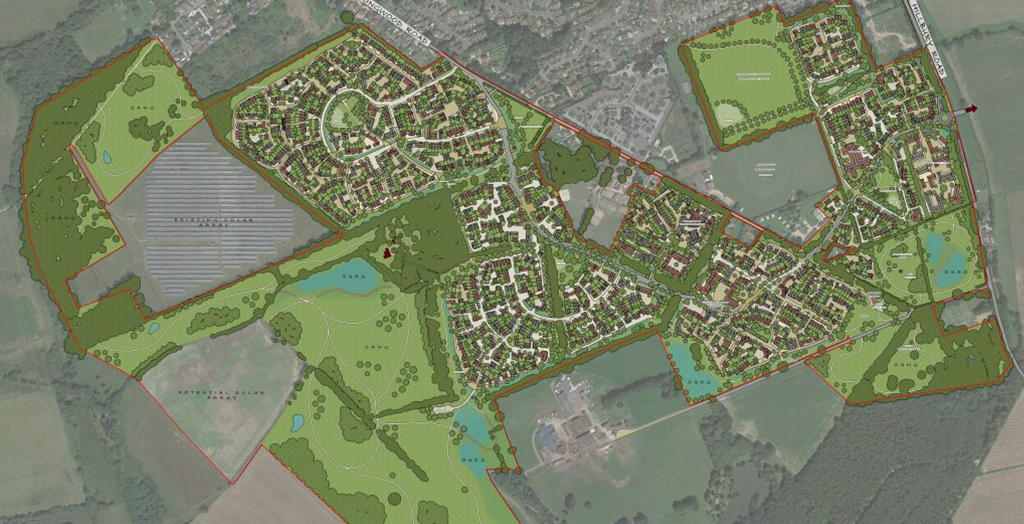
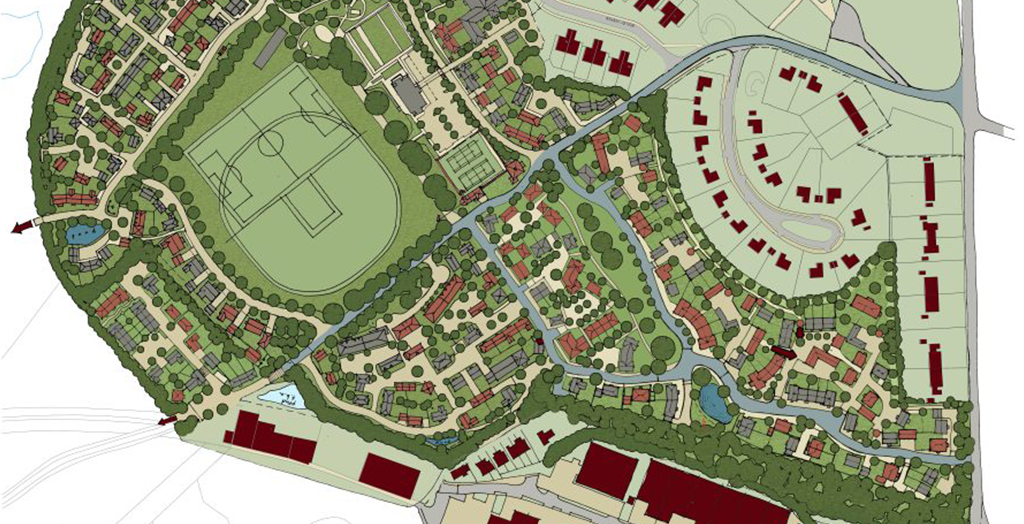
The primary movement corridor flows down with the natural topography of the hill, the route links into the main pieces of open space within the development.
Each space “unfolding” with open vistas and connectivity to the remaining part of the journey through the scheme.
Landmark buildings further promote the uniqueness of these spaces and can be seen from a number of view points within the development.
All views within the development are terminated with landmark buildings or vista stop buildings. Together with the nodal spaces, gateway buildings reinforce the integrated pedestrian routes as well as the general movement hierarchy.
Following the site’s promotion for allocation in the emerging Local Plan, a pre-application submission was created to offer thoughts on design, without being overly prescriptive or, so advanced to negate the valuable input that pre-application submission enables.
Our vision was to create desirable and attractive family homes, with generous gardens and open spaces that would form a new rural edge to the Western part of Shenley Village.
By responding to the existing features of the site and its wider surroundings, the proposal looked to retain and enhance the distinct rural character of the settlement and the surrounding landscape, which would support the sustainability, managed growth, and prosperity of the village.
The scheme has been designed as a series of courtyard spaces, varying in character from the ridged to the more informal in character.
The positioning and design of the houses placed within these courtyards have been carefully considered to maintain a high degree of natural surveillance.
The parking for the houses fronting Grange Road has been deliberately confined to the courtyard areas to maximise the aesthetic quality of the outward-looking street scenes whilst also ensuring highway safety is maximised by keeping to a minimum the number of driveways accessed off Grange Road.
The design was supported at pre-app and forms a rural-type grouping, with humble domestic forms of linear ‘Workers’ Cottages (typical to the local vernacular), which then terminates in a rural farm courtyard complex that reflects the sensation of a Rural Edge Character Area.
The dwellings are arranged so that they offer an articulated mass, which is commensurate with the built form of the local vernacular.
Two-storey forms nestle into place with gaps. Landscaping and architectural investment are set within a considered design which has an alliance with the character of the place and its rural setting.
Our vision was to create family homes, with generous gardens, open spaces and new connections to Overton.
By responding to the existing features of the site and its wider surroundings, the proposal looked to retain and enhance the distinct character of the settlement, and the surrounding landscape.
Now built, it has become a much loved and valuable part of Overton.
These Arts and Crafts-inspired buildings are designed to take advantage of the existing topography of the site, which slopes to the rear. This allows for the houses to appear as 2 story high to the front while transforming into a full 3 story structures at the back.
Careful design allows these generously proportioned houses to sit in harmony with the existing street scene, reflecting the character and form of the neighbouring development.
This design required skilled design decisions to ensure its place and setting might sit alongside the existing landscaping and its potential to aid in biodiversity enhancement.
Again, our fine art watercolours won support for a small number of family homes, set around a shared surface courtyard, set back from the road.
Now built, we look forward to returning, to see how well it has matured and settled into its place.
SWA carried out a detailed survey of the building and prepared an amendment to the planning approval completely transforming the look of the property, resulting in a striking and carefully detailed new family home.
No 9 and no 11 High Street form part of the 2-storey (with rooms in the attic) locally listed terrace of buildings, with commercial/mixed use. They occupy a prominent location directly opposite Poole Waterfront Museum and are surrounded by a plethora of Listed Buildings.
SWA were appointed to prepare a full planning application and then oversee the construction of the new shopfront at 11 High Street, including window replacement and front elevation refurbishment to both Italian Diva Restaurant and Quayside B&B. As a key building in the Conservation Area and a s a part of heritage funding, we were elected principally to act on behalf of the Local Planning Authority.
The existing shopfronts were in dire need of restoration and their current appearance was not in keeping with their important setting. The façade was cluttered with old and rusty fixtures, the restaurant shopfront had domestic-looking and unattractive glazing and had an overpowering security shutter enclosure.
SWA designed a new shopfront that takes inspiration in its layout, pattern and arrangement from several existing shopfronts within the Conservation Area. It is framed by pilasters which close the shopfront ensemble and with the facia sign as a form of entablature with conventional cornice, frieze and architrave, in traditional pattern. The pilasters have a base and cap which has a form of classical proportion and with the base having dominance over the incoming stall riser. The glazed area, hierarchy of mouldings, sizes and sections, as well as the stall riser and plinth, are all taken from comparative examples nearby.
SWA’s design and careful detailing brought back a historical narrative that certainly adds to the character and appearance of the area, as well as to the commercial vitality of the restaurant and the neighbouring premises.